
Which Stainless Steel Handrail Pipe Is Right for You?
Here’s a friendly, easy-to-read guide to help you pick the right stainless steel handrail pipe for your project.
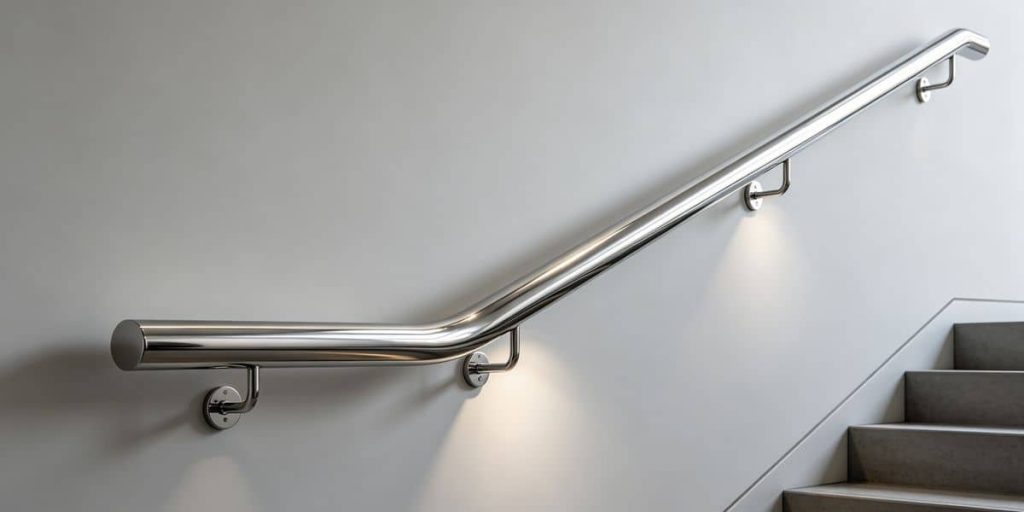
Which Stainless Steel Handrail Pipe Is Right for You?
So you need a stainless steel handrail pipe. Maybe you’re building a deck, fixing up a staircase, installing grab bars for a bathroom, or putting a railing along a commercial ramp. You walk into a hardware store or browse online, and suddenly you’re hit with numbers like 304, 316, schedule 40, wall thickness, brushed finish… and your head starts to spin.
Don’t worry. I’ll break it down like I’m talking to a friend over coffee. By the end of this, you’ll know exactly what to look for.
First things first: Why stainless steel?
Because it doesn’t rust like regular steel, it looks sleek, and it’s strong. You’ve seen it on modern homes, hospitals, subways, and fancy hotels. It’s the workhorse of handrails. But not all stainless steel pipes are the same.
The big decision: 304 vs. 316 stainless steel
This is the most common choice you’ll face. Think of it like choosing between a good raincoat (304) and a heavy-duty storm jacket for salty ocean spray (316).
- Grade 304 – This is your everyday stainless steel. It resists rust very well in normal conditions: indoors, on a covered porch, in a dry climate, or inside an office building. It’s cheaper than 316 and does the job for 90% of home and commercial projects. If your handrail won’t get constantly wet or blasted with salt, pick 304.
- Grade 316 – This is the tough guy. It has molybdenum added, which makes it resist corrosion from salt water, chlorine, and harsh chemicals. If you live near the beach, have a pool (chlorine in the air), or are installing handrails on a boat dock or outdoor stairway in a rainy/snowy area, spend the extra money on 316. It’ll last decades without getting those ugly brown rust spots that 304 might eventually develop in that environment.
Quick rule:
Inside your home, garage, or covered commercial space → 304 is fine.
Near the ocean, a swimming pool, or outdoors in wet weather → go 316.
Next up: Pipe shape – round, square, or oval?
Handrail pipes come in different shapes, and each feels different in your hand.
- Round pipe – The classic. It’s strong, easy to grip, and easy to bend if you need curves. You see it on most stair railings and grab bars. But some people find it slippery with wet hands.
- Square pipe – Modern and sharp-looking (literally and visually). It’s great for contemporary homes or industrial-style buildings. However, it’s not as comfortable to hold for a long time because the corners dig into your palm. Good for guardrails or low-traffic areas.
- Oval (or rectangular with rounded edges) – The ergonomic choice. It feels like a bicycle grip. Many people prefer oval for stair handrails because it’s easy to wrap your hand around and gives a secure feel. It’s a bit more expensive than round pipe.
My two cents: For a staircase where people rely on the rail for balance, go with round (1.5” to 2” diameter) or oval. For a horizontal railing on a deck where you just need to block falls, square is fine.
Wall thickness: Don’t ignore this
A handrail pipe looks the same on the outside, but the inside wall thickness makes it either sturdy or flimsy. Thickness is measured by “gauge” (lower number = thicker) or “schedule” (higher number = thicker). The most common for handrails are:
- 16 gauge (about 1.5mm) – Good for light-duty residential handrails where you don’t lean hard. Feels solid enough for most homes.
- 14 gauge (about 1.9mm) – Stronger. This is the sweet spot for most outdoor residential and light commercial use. It won’t bend if a heavy person grabs it.
- 11 gauge or schedule 40 (about 3mm) – Heavy-duty. Used in factories, public transit, schools, or anywhere with high traffic or potential for abuse. It’s overkill for your home staircase but perfect for a subway station railing.
Don’t buy 18 gauge or thinner. You can feel it flex – not safe for a handrail.
Surface finish: Shiny or subtle?
Stainless steel handrails come in different textures. The finish affects how it looks, how slippery it is, and how much it shows fingerprints.
- Mirror (No. 8 finish) – Super shiny like a chrome bumper. Looks beautiful in luxury homes or modern lobbies. Shows every fingerprint and water spot. You’ll be wiping it down constantly.
- Brushed (No. 4 finish) – The most popular. It has soft satin lines, hides smudges well, and gives a clean, professional look. Great for kitchens, bathrooms, and anywhere people will touch it. Highly recommended.
- Matte or bead-blasted – No shine at all. Hides scratches and fingerprints best. Used in hospitals or industrial settings. It feels a bit like chalky metal.
- Powder-coated (color) – You can actually paint stainless steel with a special powder coating. Why would you? Color! It also adds a non-slip texture. But if the coating gets scratched, the steel underneath is still rust-proof.
For most people: brushed finish wins. It’s practical and looks good.
Pipe diameter: How thick should it be?
Diameter matters for grip comfort. Common sizes for handrails: 1.5”, 1.9”, 2”, and 2.5”.
- 1.5” (38mm) – Perfect for grab bars in bathrooms or for children’s handrails. Also used in some modern designs.
- 1.9” (48mm) – The standard. Most adults find this comfortable to hold. It’s what you see on staircases everywhere.
- 2.5” (60mm) and up – Chunky and industrial. Harder for small hands to grip. Usually used for guardrails or posts, not for grabbing.
Stick with 1.5” to 1.9” for actual handrails.
Mounting style: How will it attach?
You also need to think about brackets and posts. The pipe itself is only half the story.
- Wall-mounted handrail – Attached to a wall with brackets. Make sure the brackets are stainless steel too (not coated steel that rusts). Bracket spacing should be no more than 4 feet apart, closer for heavy use.
- Post-mounted railing – Used on decks or ramps. Posts go into the ground or mount on top of the deck. The pipe runs between posts. You need strong posts – usually 2” or 2.5” square or round tube.
- Continuous pipe – Bent into shape with no joints. Looks clean but requires a pipe bender and welder. Not a DIY job.
Outdoor vs. indoor – the final checklist
Let’s make it super simple.
Indoors (living room, hallway, office, hospital)
- Grade: 304
- Shape: Round or oval (1.5”-1.9”)
- Thickness: 16 or 14 gauge
- Finish: Brushed (or mirror if you want to impress guests)
Outdoors under cover (porch, garage, covered walkway)
- Grade: 304 (unless near ocean/pool)
- Shape: Round or square
- Thickness: 14 gauge minimum
- Finish: Brushed or matte
Outdoors exposed to rain or snow
- Grade: 304 works, but 316 is better for long life
- Shape: Round for grip (water makes square edges sharp)
- Thickness: 14 gauge
- Finish: Brushed or powder-coated
Near the ocean or a pool
- Grade: 316 – non-negotiable
- Shape: Round or oval
- Thickness: 14 gauge (or 11 gauge for public areas)
- Finish: Brushed (mirror shows salt spots badly)
Public or high-traffic area (schools, train stations, ramps)
- Grade: 304 (or 316 if near beach)
- Shape: Round (1.9”) – it’s the universal standard
- Thickness: 11 gauge (schedule 40) – people will lean, bump, and swing on it
- Finish: Brushed or matte – hides vandalism and dirt
A few extra tips before you buy
- Check your local building code. Most places require handrails to be 1.25” to 2” in diameter, able to withstand 200 pounds of force, and installed at a specific height (usually 34”-38”). Don’t guess – look it up.
- Don’t mix metals. Use stainless steel brackets, screws, and posts. If you use regular steel, it will rust and stain your nice handrail.
- Budget reality: 316 stainless costs about 30-50% more than 304. For a beach house, that’s worth it. For a back deck in Arizona, it’s a waste.
- Cleaning is easy. Wipe with soap and water or a stainless steel cleaner. Avoid bleach or abrasive pads (they can damage the finish).
So, which one is right for you?
Let’s do three quick examples.
Example 1 – You’re a homeowner in Ohio adding a handrail in your basement stairs.
Get 304, round pipe, 1.9” diameter, 16 gauge, brushed finish. Inexpensive and perfect.
Example 2 – You own a beachfront rental cottage in Florida with an outdoor staircase.
Get 316, oval pipe, 1.5” diameter, 14 gauge, brushed finish.
Example 3 – You’re building a ramp for a small shop in a dry inland city.
Get 304, round pipe, 1.9” diameter, 14 gauge, matte finish. Durable, safe, and looks pro.
Now you’ve got the basics. No need to become a metallurgist. Just remember: 304 for most, 316 for salt/wet, brushed finish is your friend, and round feels best in your hand.
Go get that handrail. Your stairs will thank you.